Note
The NiMARE NeuroLibre preprint is a valuable resource that provides examples on how to utilize the package. However, it is important to note that this publication is static and will not be updated as NiMARE evolves. Despite potential changes to the syntax of the code, the publication remains an excellent reference to understand the various applications of NiMARE.
Examples
Working with studysets
NiMARE’s primary collection type is now Studyset.
Studysets can be used directly with estimators, workflows, and several transformers,
while the legacy Dataset class remains available for backwards compatibility
and migration workflows.
Additionally, NiMARE contains fetching and conversion tools for a number of meta-analytic resources, including Neurosynth, NeuroQuery, NeuroVault, and, to a limited extent, BrainMap. In the examples below, we show how to work with Studysets in NiMARE, along with legacy Dataset-specific examples for interoperability and migration.


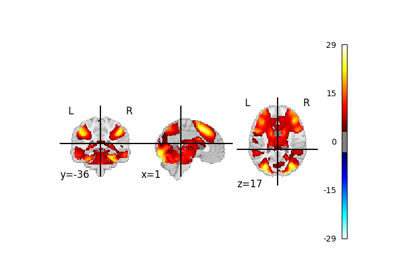



Create a legacy NiMARE Dataset object from a JSON file

Performing meta-analyses
NiMARE implements a number of coordinate- and image-based meta-analysis algorithms in its meta module.
The examples below use Studyset as the primary analysis input,
with legacy Dataset objects appearing only in preprocessing steps
where older APIs still require them.
For more information about the components that go into coordinate-based meta-analyses in NiMARE, see Coordinate-based meta-analysis in NiMARE, as well as Outputs of NiMARE.
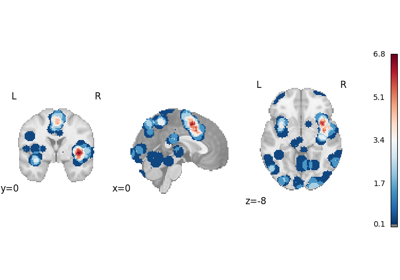
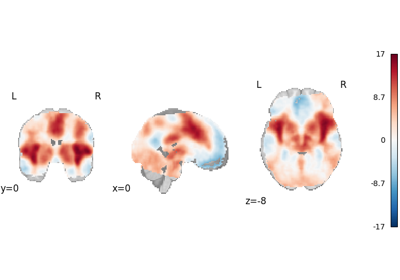
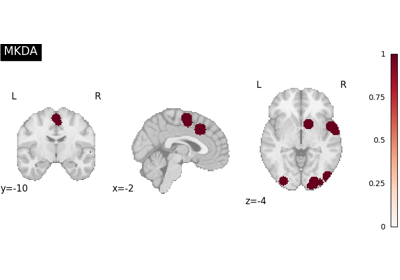
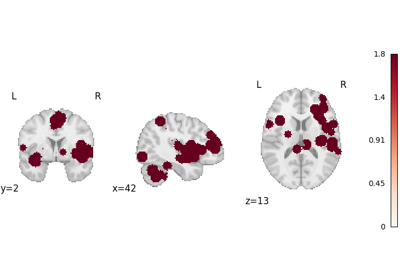
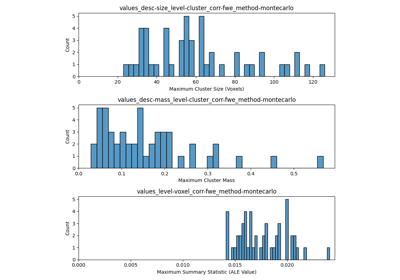
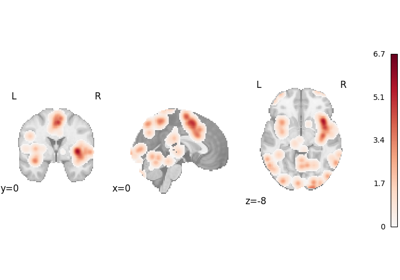

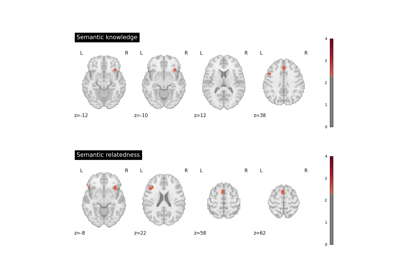
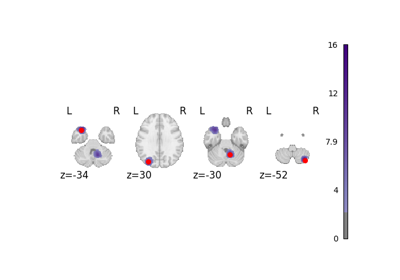
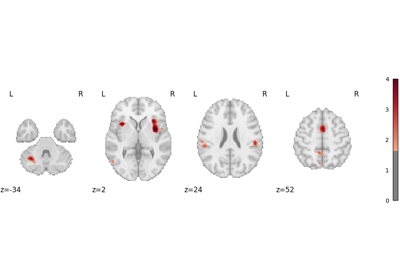
Run a coordinate-based meta-analysis (CBMA) workflow
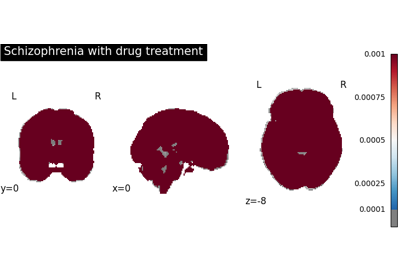
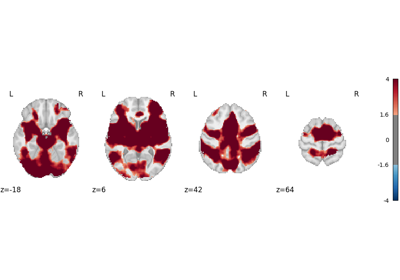


Predictive ALE: fast FWE correction without Monte Carlo

Stability diagnostics: Jackknife vs. ResampledStability
Annotating Studysets
Annotation tools within NiMARE (annotate) refer to methods which
assign labels to analyses in a Studyset, generally based on text.

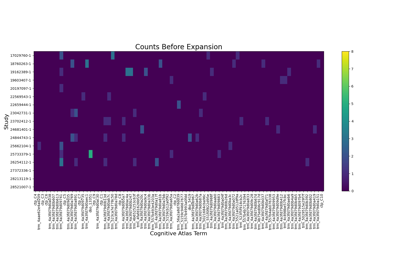

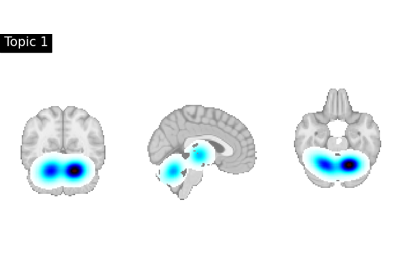
Decoding ROIs and images
Functional characterization analysis refers to methods which use meta-analytic databases to characterize, or “decode”, brain regions or statistical maps in terms of tasks and/or mental processes. For more information about functional characterization analysis, see Meta-analytic functional decoding.